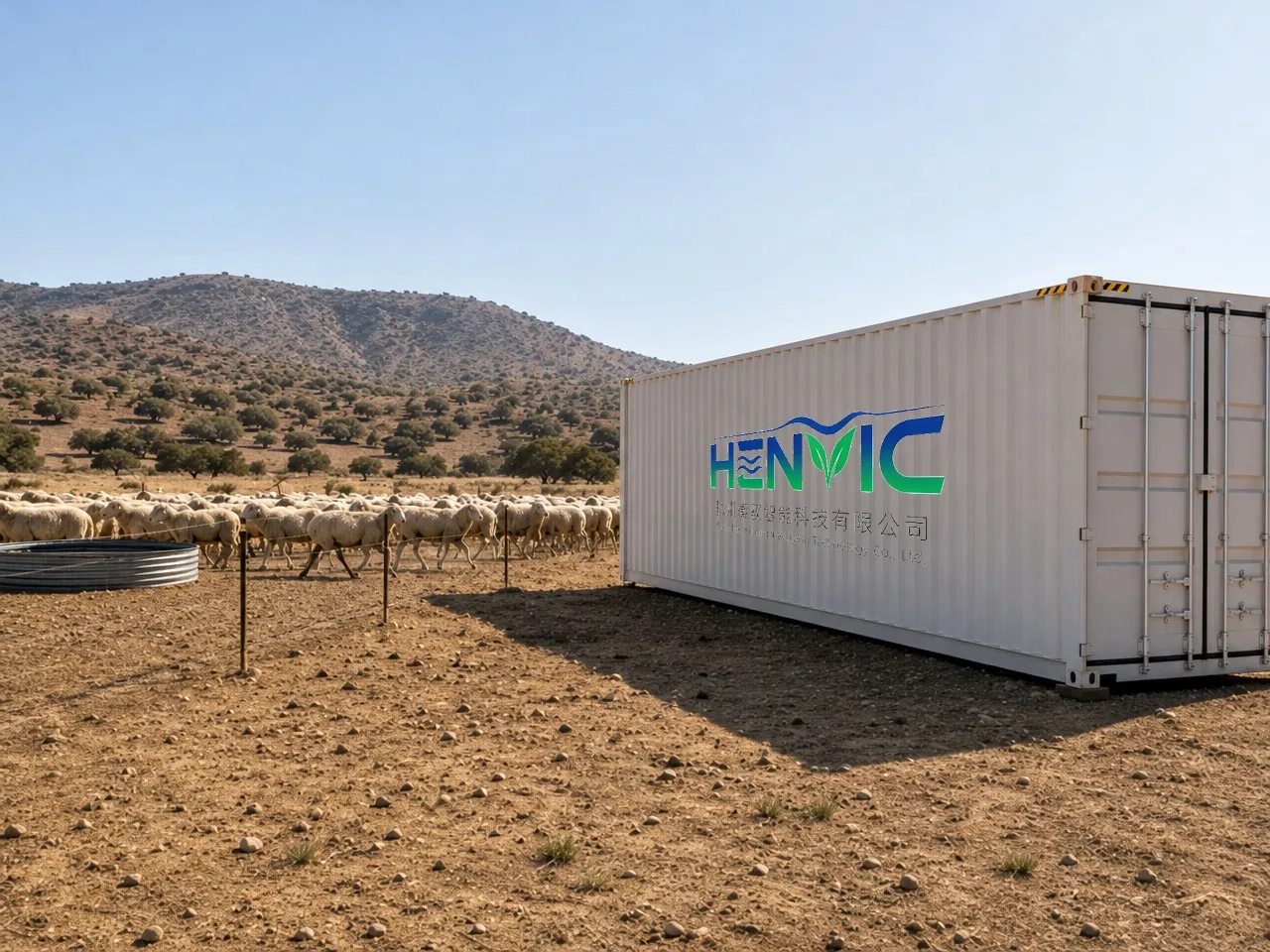
Agriculture has always been a story about land. For ten thousand years, the fundamental unit of farming has been the hectare — a measure of area, of surface, of ground. Everything downstream follows from that: how much a farm can produce, where it can exist, how far its food must travel, and what it costs to expand. A container farm with vertical growing breaks that premise at its root. It does not find more land or better land; it changes the dimension in which the question is asked. Grow upward instead of outward, and the hectare stops being the limiting variable. This is the real innovation — not the steel box itself, but the spatial logic it makes possible.
From Area to Volume: Changing the Unit of Accounting
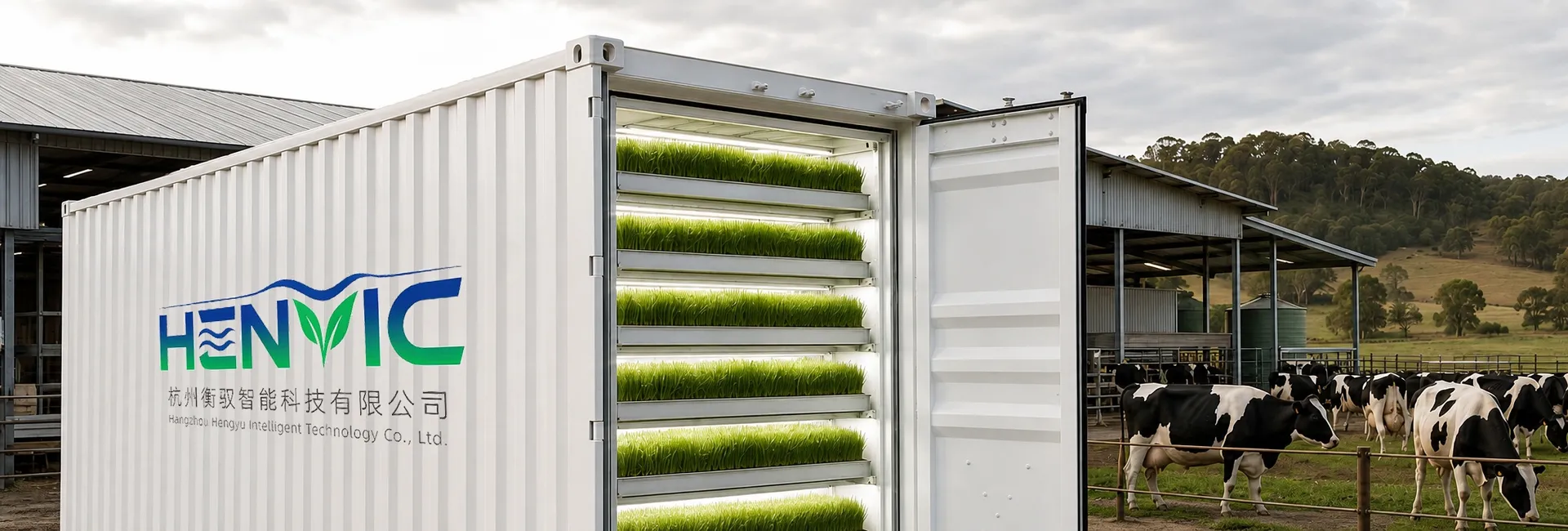
The conventional measure of agricultural capacity is yield per unit area — bushels per acre, tonnes per hectare. Vertical growing replaces area with volume as the organizing variable. A rack system four or five tiers high does not multiply the floor by a factor of four or five in practice, because access aisles, airflow, lighting clearance, and maintenance headroom all consume space. But it does expand the effective growing surface several-fold within an identical footprint, and that changes the arithmetic of every subsequent decision.
The shift matters because it decouples two things that were previously inseparable. In a field, growing area and solar collection area are the same surface. In a vertical system they split: the floor is a structural and logistical surface, while the canopy is a stacked, engineered one. Once those two functions separate, the design problem changes from "how much land do I have?" to "how many tiers can I support with the light, airflow, and drainage I can deliver?" The constraint migrates from geography to engineering — and engineering constraints, unlike geography, can be redesigned.
The City Becomes a Growing Region
The second spatial rule that vertical growing rewrites concerns location. Historically, agricultural production has been pushed to the periphery for a simple reason: it needs space. Cities grew where trade routes and harbors were, and food grew everywhere else. The result is the food-mile system — lettuce harvested in one climate, chilled, trucked or flown, and delivered days later to a market on the other side of a continent or ocean.
A container farm is roughly 30 square meters of floor. That is a footprint that fits on a rooftop, in a parking structure, in a vacant lot, in a warehouse bay, in the basement of a supermarket, in a school courtyard, on a barge, or in a shipping terminal. Combined with vertical stacking inside, each of those locations supports a meaningful growing operation. The consequence is that production can migrate back into consumption centers — not as a gesture, but as a defensible logistics decision, because the crop now spends hours in transit instead of days.
It is worth being precise about what this does and does not accomplish. Proximity shortens supply chains, cuts spoilage, preserves quality, and eliminates the need for post-harvest preservation treatments. It does not make the farm independent of an external system — it makes it dependent on the electrical grid instead of on land and climate. The spatial liberation is real, but it is a substitution, not an escape.
Density, and the Microclimate Problem It Creates
Here the honest engineering difficulty appears, and it is genuinely about space.
A field is spatially uniform in a way that a vertical rack system is not. Sunlight falls evenly; wind mixes the air; rain drains by gravity. In a stacked container, every tier is a distinct microclimate nested inside a shared enclosure. Warm, humid air rises, so upper tiers run warmer and drier than lower ones unless the airflow is actively managed. Light fixtures add heat where the canopy is densest. Drainage must be engineered to move water from every tier without cross-contamination. CO₂ injected at one point does not distribute itself evenly across five levels of leaf mass.
The canopy itself creates a boundary-layer effect: within a dense stand of leaves, air movement slows dramatically, humidity approaches saturation, and transpiration stalls. In a horizontal field this self-limiting effect is broken by natural wind. Inside a sealed box, it must be broken deliberately, with fans, ducting, and rack spacing designed to penetrate the canopy rather than merely stir the air above it.
So vertical growing does not simply multiply space — it multiplies the problems per unit of floor area at the same rate. Every added tier adds a light system, a humidity load, a drainage path, and an airflow requirement. Density is the central design tension of the entire model: pack more growing surface into a given volume and you also concentrate heat, moisture, pathogens, and failure modes. The engineering answer is not maximal stacking but optimal stacking, constrained by how uniformly the environment can be controlled across every level.
Stackability, Portability, and the Standardization Dividend
Vertical growing inside a container inherits a second, less obvious spatial advantage: the container is a standardized global unit. Its dimensions are fixed, its lifting points are known, its road, rail, and sea handling infrastructure already exists. This means a container farm can be manufactured in one place, shipped anywhere, and deployed on a poured concrete pad with a power and water connection — in weeks, not years.
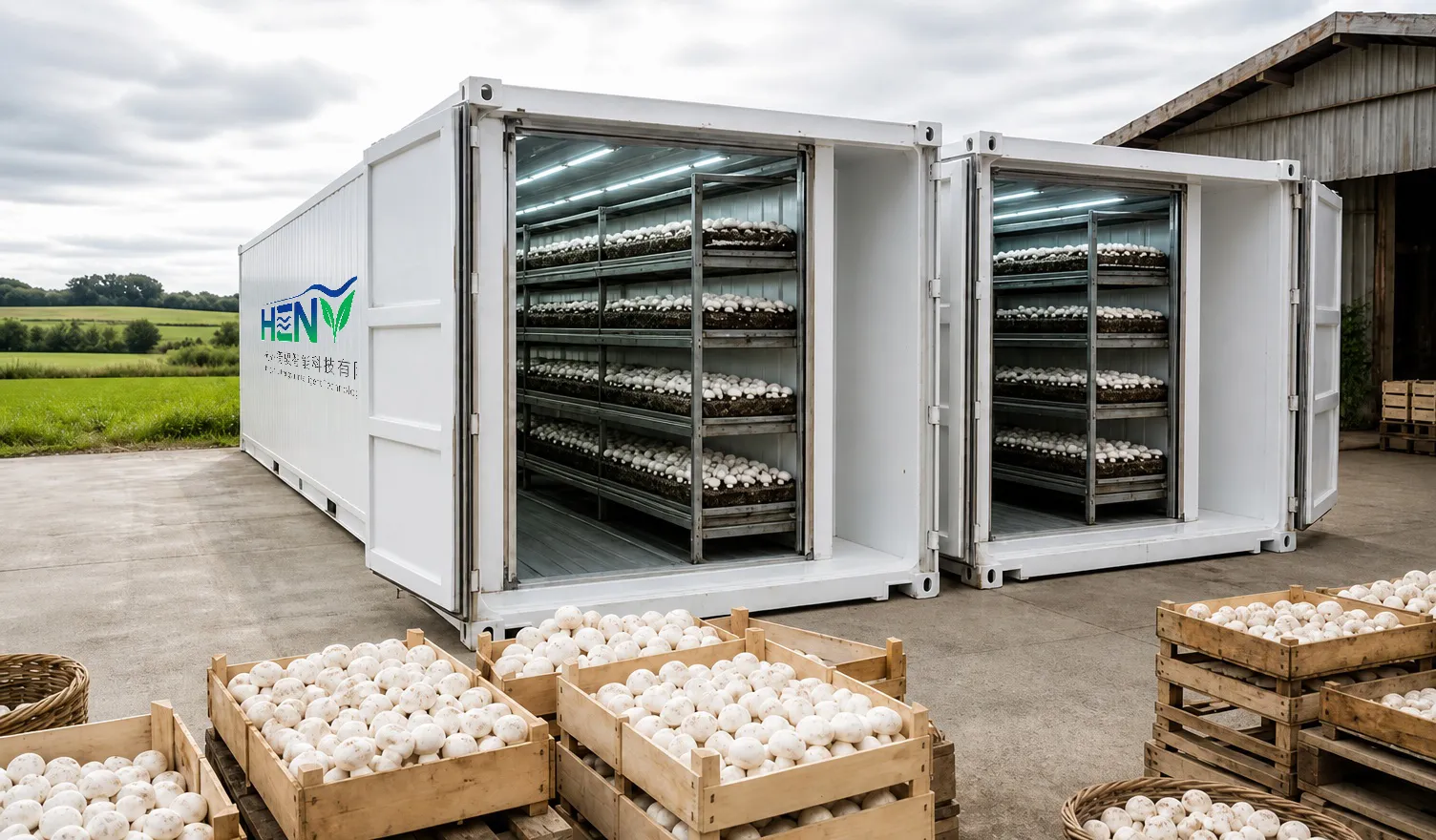
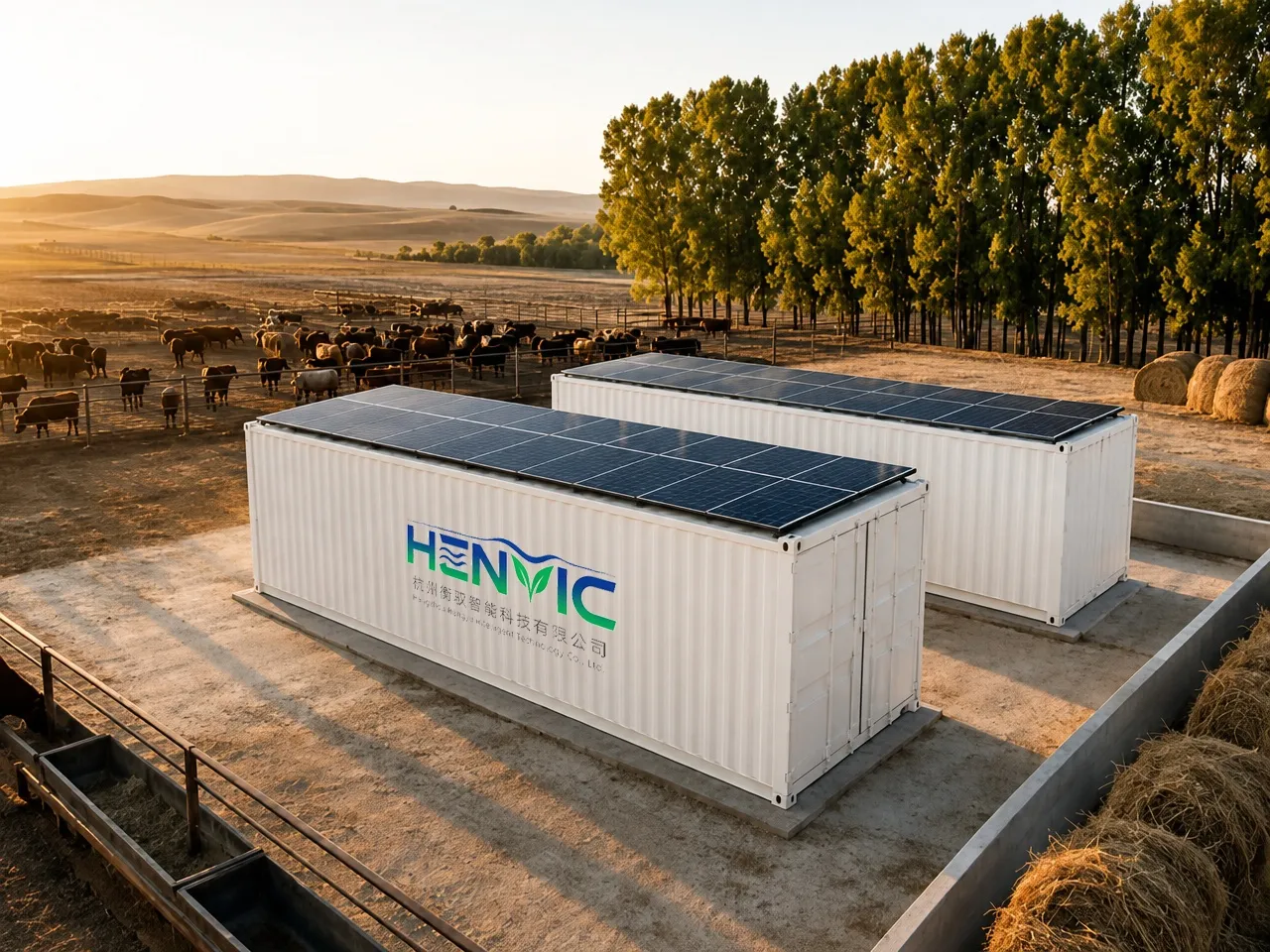
Standardization also enables aggregation. Multiple containers can be stacked or arranged side by side to form a larger facility, with shared utilities and centralized control, scaling output by replication rather than by bespoke construction. And because each unit is identical, a recipe validated in one container transfers directly to the others — the learning scales with the physical footprint, which is not true of conventional farms, where every field is a different soil, slope, and microclimate.
What Vertical Space Cannot Do
The spatial rewrite has firm limits, and they define where the model belongs.
Caloric crops are out of reach. Vertical stacking cannot overcome the fundamental energy economics of staple grains. A wheat plant requires a certain total quantity of light to produce a given mass of grain, and that quantity must be paid for in electricity rather than received as free sunlight. The denser the stacking, the more light is required per unit of floor — which grows the energy bill rather than shrinking it. Vertical growing multiplies floor productivity, not energy efficiency, and for low-value, high-light crops that distinction is fatal to the economics.
Height has a physical ceiling. Each additional tier increases structural load, blocks light penetration to lower tiers, and complicates access for planting, inspection, and harvest. Practical systems tend to settle in the range of a few tiers to several, depending on crop height and the sophistication of the lighting and handling systems.
Land-free does not mean resource-free. A vertical farm consumes electricity, nutrients, and capital in place of land, sunlight, and rain. In water-scarce regions the trade is clearly favorable. In regions with abundant arable land and expensive power, it is not. The spatial advantage is real, but it must be weighed against the resource substitution it requires.
And the crops that fit are specific. Short, fast-cycling, high-value, low-growing plants — leafy greens, herbs, microgreens, strawberries — are the natural occupants of vertical space. They reach harvest before height becomes a liability, and their market price supports the cost structure.
What the Rewrite Actually Achieves
Strip away the terminology and the spatial logic of vertical container farming comes down to one move: substituting engineered volume for geographic surface. That substitution has three consequences worth holding onto.
It makes production location-independent, so farms can be placed where consumers are rather than where land is cheap. It makes production density a design variable rather than a fact of nature, so output per square meter becomes something to engineer rather than something to accept. And it makes the growing environment fully enumerable — because a sealed box with measured inputs is a system whose behavior can be modeled, optimized, and repeated. None of that would be possible in a field, where space is horizontal, uneven, and shared with the weather.
A container farm is not going to feed a city, and any claim that it will is a misunderstanding of what it does. What it demonstrates is narrower and more interesting: that the oldest constraint in agriculture — the requirement for ground — can be renegotiated. Whether a given operation should renegotiate it depends on the price of electricity, the value of the crop, and the distance to the market. The spatial rules have changed; the economics still decide who gets to use them.