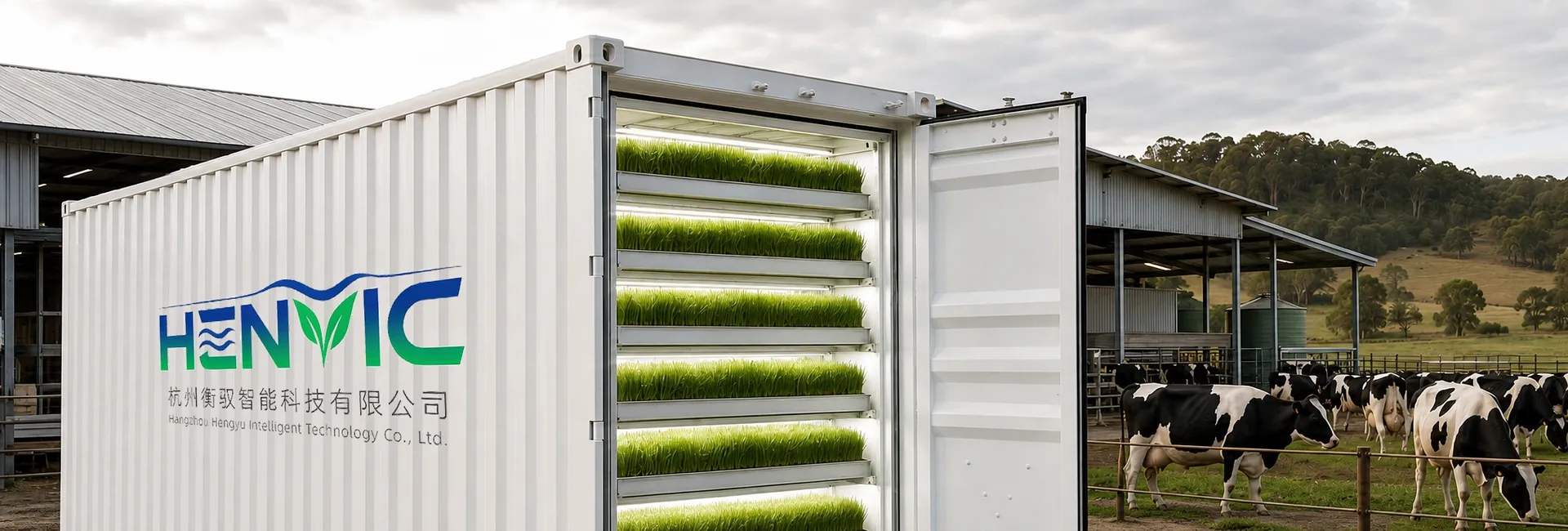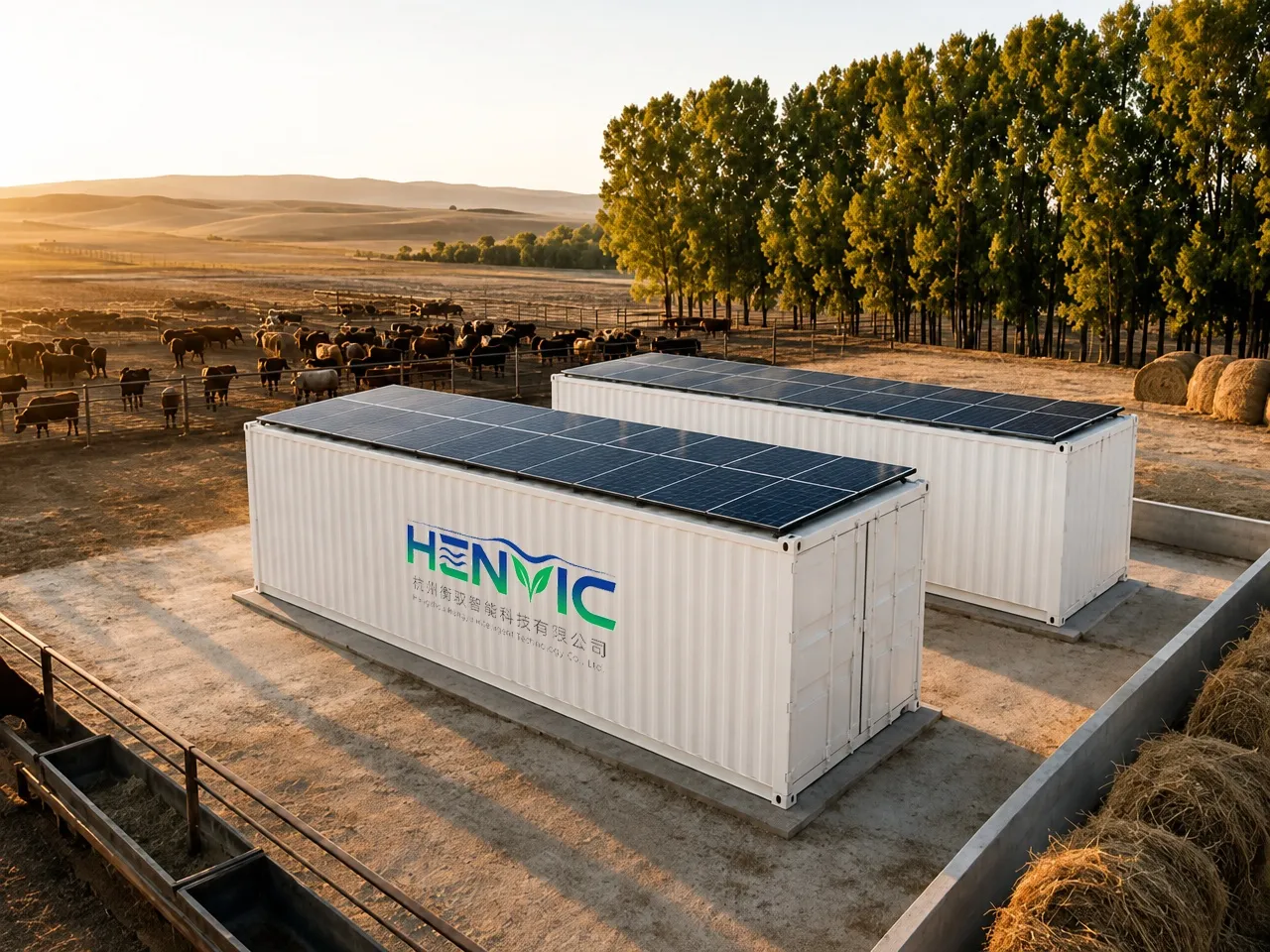
A container farm is essentially a controlled logistics system rather than a traditional field with soil and sunlight. This is first reflected in the precision of nutrient and water supply, and it also determines what can truly be mass-produced inside a shipping container.
1. Hydroponics: Turning the Nutrient Solution into "Soil"
Most indoor leafy greens produced in container farms (lettuce, arugula, mint, and various herbs) are grown via hydroponics. The core idea is to replace soil entirely with a precisely formulated nutrient solution, recreating a root environment with controlled nutrients, no weed seeds, no pathogens, and no weather-driven fluctuation.
In practice, a nutrient formulation means dissolving fertilizer salts into deionized water according to the crop's demand curve: supplying nitrogen (mainly nitrate), phosphorus, potassium, calcium, magnesium, and sulfur as the six macronutrients, plus iron, manganese, zinc, copper, boron, and molybdenum as the six micronutrients. Most commercial operations use the Johnson solution as a base stock, adjusting the nitrate-to-ammonium ratio, electrical conductivity (EC), and pH to suit the crop. As the plant enters vigorous vegetative growth, EC can be gradually raised from about 1.0 mS/cm at seedling stage to 1.8–2.2 mS/cm at heading stage, while pH is generally maintained between 5.5 and 6.2 to keep nutrient uptake efficient.
Irrigation in hydroponics typically takes one of two forms. Deep water culture (DWC) immerses roots in shallow nutrient tanks with a small air pump boosting dissolved oxygen; nutrient film technique (NFT) lets a thin film of nutrient solution recirculate along film-like roots at a flow rate of roughly 1–3 L/min. A small container farm with about 50 m² of planted area may consume 300–800 L of water per day and hold 4–8 m³ of nutrient solution—a consumption bill that must be measured separately.
2. Aeroponics: Moving Roots into Air
Aeroponics is the most technologically intensive and mass-production-oriented approach inside a container farm. The principle is to suspend crop roots in a sealed mist chamber, where high-pressure pumps (typically operating at 10–60 MPa) atomize nutrient solution into droplets of 10–50 microns, sprayed intermittently onto the root surface. This lets roots receive both oxygen and nutrients simultaneously, eliminating the "oxygen-versus-nutrients" structural conflict found in hydroponics.
A critical parameter is the spray interval ratio, commonly set around 30 seconds of spraying followed by a 30-second pause (or a 10–15 second spray pulse every 30 seconds), keeping root surfaces moist but not submerged, and letting roots re-oxygenate during pauses. This design greatly improves root-zone oxygen supply and plant vigor. Under sufficiently strong light, an aeroponic tomato or leafy-green production line can reach a yield potential far exceeding traditional soil or hydroponic setups.
The nutrient solution requirements are correspondingly stricter. Aeroponic nozzle apertures are tiny (usually 50–100 microns); any suspended particle or salt precipitate will clog them and disable the entire line. Therefore, the solution must pass through multiple stages of filtration—sand filters, bag filters, activated carbon, UV sterilization, and membrane filtration—with pH strictly kept between 5.5 and 6.0, EC between 1.2 and 2.0 mS/cm, and hardness (calcium and magnesium) kept low enough to avoid crystallization at the nozzles, which would quickly wear down precision atomization components.
3. The Other Half of the Loop: What Freeze-Drying Contributes
To understand a container farm, one must also see that it produces not only vegetables but also high-value processed products through its post-processing chain. A freeze dryer extends the product line: leftover tender shoots, secondary seedlings, and trimmings from crops—or soft fruits like strawberries and aromatic herbs—are placed in a freeze dryer where moisture is removed under low temperature, low pressure, and oxygen-free conditions, yielding products with a residual moisture content of only 1–5% that are lightweight, compact, long-lasting, and rehydrate quickly.
Such products shine in high-value niches: camping food, emergency reserves, and pharmaceutical-grade nutrition. They require no cold chain, no proximity to farmland, and minimal storage space—making them logistically friendly. In essence, freeze-drying transforms "by-products that need disposal" into "products that can be sold," which is the mark of a container farm evolving from "just growing vegetables" into "a full-supply-chain solution."
4. Designing the Nutrient Solution and Irrigation System
For a truly deployable container farm, the nutrient system design focuses on several aspects.
First, water intake and purification. Municipal or groundwater must be softened, reverse-osmosis treated, and possibly deionized to meet irrigation standards. Over-hard water causes calcium and magnesium ions to drift in the nutrient solution, leading to precipitation and clogging in irrigation lines.
Second, formulation and pH control. Nutrient stock is diluted proportionally to the target EC, then pH is adjusted with strong acid or alkali. Automated systems can measure EC/pH in real time and dose acid/base automatically to prevent human-induced fluctuations.
Third, circulation and filtration. Nutrient solution circulates in a closed loop between planting troughs, return tanks, and storage reservoirs, with multiple filtration stages—centrifugal separation, sand filtration, bag filtration, activated carbon, and membrane filtration. For aeroponics, nozzles require regular chemical cleaning. Over long-term operation, algae, root debris, and organic particles accumulate in pipelines; once they reach aerosol nozzles, the clogging becomes irreversible.
Fourth, sterilization and disinfection. The circulating solution accumulates pathogens and root-rot spores, requiring regular UV, ozone, or hydrogen peroxide treatment. For aeroponics, disinfectants must be chosen not to damage roots or clog nozzles, avoiding irreversible pipeline contamination.
Fifth, online monitoring and data collection. Key indicators include temperature, pH, EC, dissolved oxygen (DO), liquid level, and circulation flow rate. These data not only serve automatic control but also support supply-chain transparency—when to change, replenish, or drain the solution all need documented records.
5. Key Decision Criteria for System Selection
When evaluating nutrient and irrigation systems from various vendors, reliability can be judged from several points.
First, check system redundancy. Are circulation pumps, supply pumps, and backup reservoirs redundant? If a main pump fails, can the system still sustain irrigation for a period? For a container system worth hundreds of thousands of dollars, redundancy is not a luxury but insurance.
Second, check the filtration-to-disinfection ratio. Aeroponics demands much higher filtration than hydroponics, and nozzle precision dictates the filtration level required. Yet one should not blindly pursue the "highest grade"—the filtration level should match the actual water source and crop type, otherwise both cost and energy consumption are inflated.
Third, examine energy data. The same nutrient and irrigation system can vary severalfold in operating cost across vendors. Differences in pumps, solenoid valves, and heating/cooling energy alone may decide whether the system is profitable. Request "energy consumption per square meter per production cycle" and "energy per kilogram of yield" rather than listening to talk of "high configuration."
6. Outlook: From Closed Loops to Ecological Interconnection
The nutrient and irrigation systems of a container farm are still constrained by energy consumption and maintenance complexity. But when combined with freeze-drying, aquaponics, and other closed-loop devices, both energy and matter can form tighter cycles. Aquaponic fish waste becomes a direct nutrient source for plants, while the high water-use efficiency of aeroponics suits regions with scarce or poor-quality freshwater.
Technological advances are also making these systems lighter and more reliable: sensors are cheaper and more precise, PLC and cloud-based remote operations enable unified scheduling of multiple containers, and standardized container interfaces lower the technical barrier for operators. In the future, it may no longer be necessary to debate whether container farms can replace traditional agriculture—they are more likely to become a standardized produce supply solution for specific scenarios such as urban peripheries, extreme environments, and post-disaster reconstruction. And post-processing steps like freeze-drying will broaden the range of products they offer.