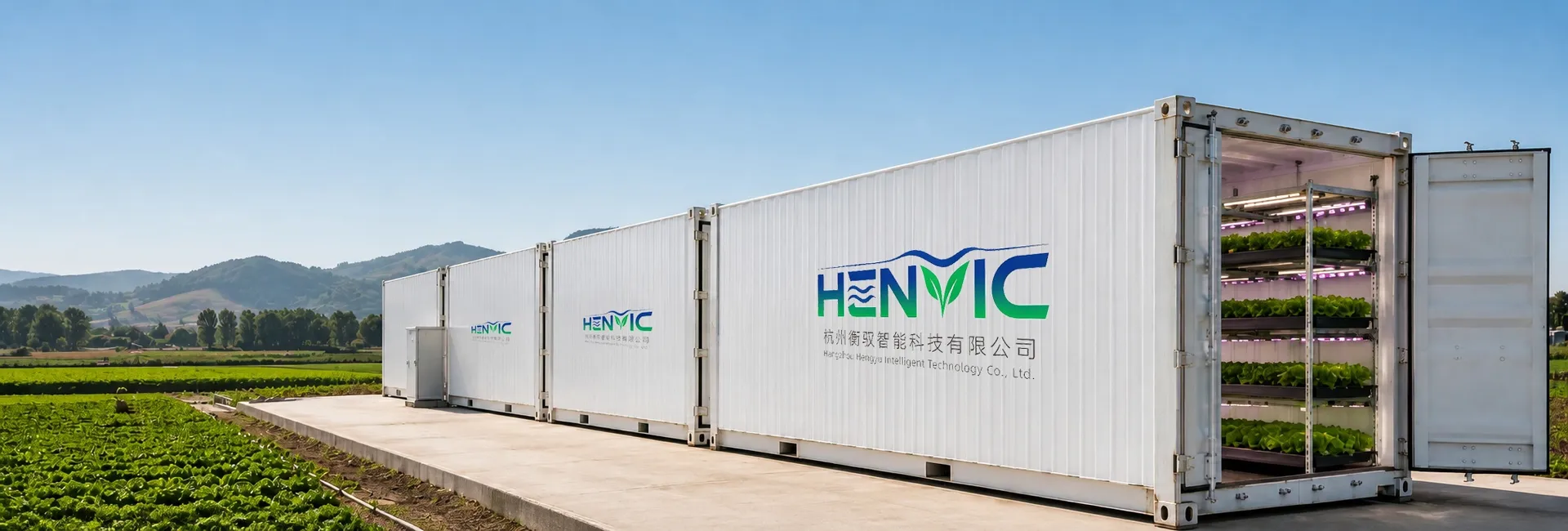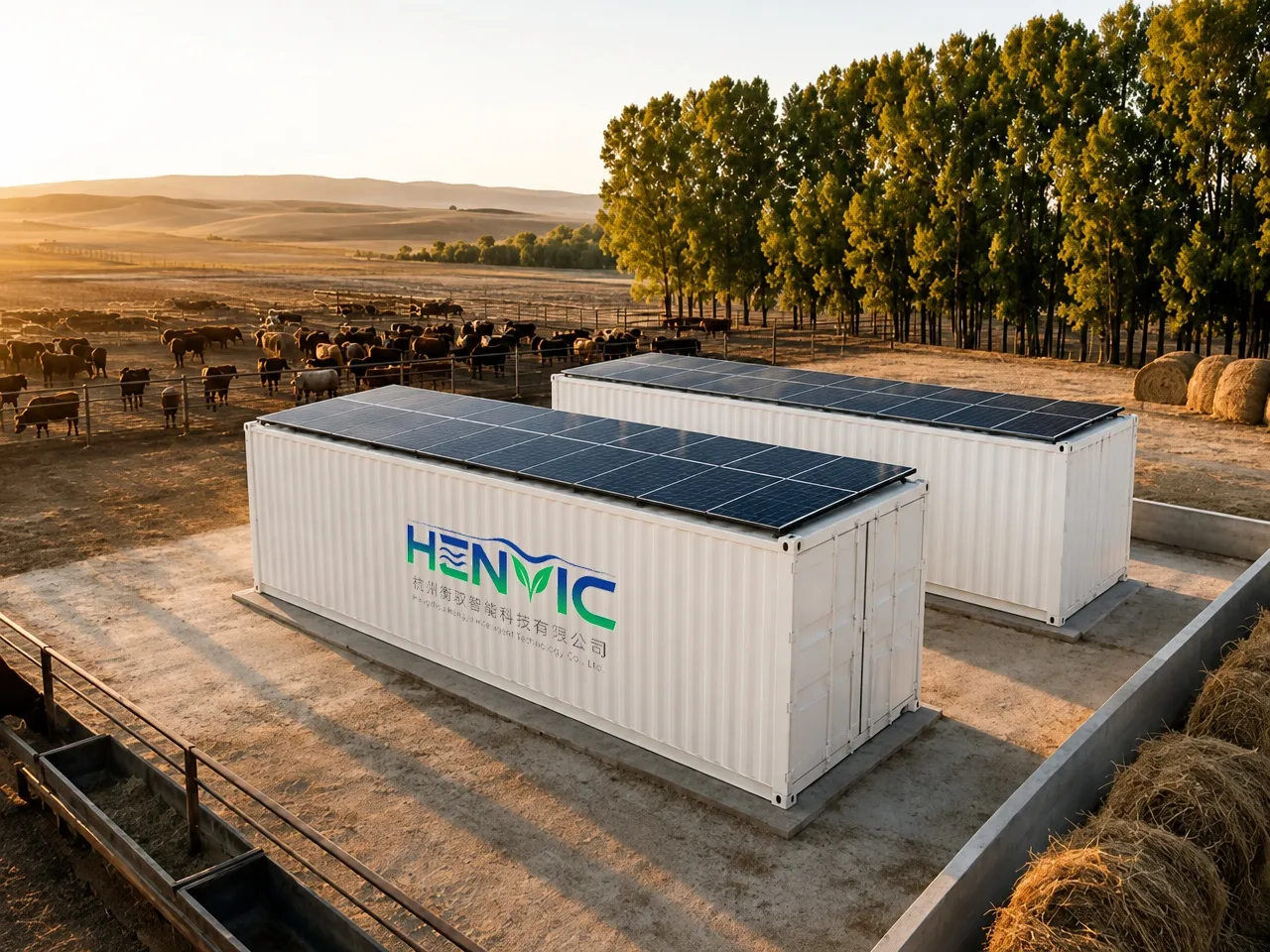
Consistency isn't the product of better seeds or a cleverer growing method. It comes from removing variables entirely — and then paying for the privilege. A container farm doesn't grow superior lettuce so much as it stops the environment from interfering. That distinction matters, because it explains both why the quality is so steady and why the economics are so unforgiving.
Outdoors, lettuce is negotiating with the weather every day
Field and greenhouse lettuce varies because the plant's growth is a running response to conditions it can't control. Light changes with cloud cover, season, and day length. Temperature swings between day and night and across a season. Humidity rises after rain and collapses at midday. Vapor pressure deficit — the driver of transpiration — can vary by a factor of two within a single afternoon.
That variation shows up in the product. Head weight drifts. Leaf thickness changes. The ratio of leaf to stem shifts with light. And because transpiration is the engine that pulls calcium into a plant's growing tip, any condition that suppresses transpiration — high humidity, still air, cool nights — can produce tipburn, the brown necrosis on inner leaf margins that ruins marketability. Outdoors, tipburn is a weather problem you manage. Indoors, it's a setpoint you control.
Seasonality amplifies all of this. A greenhouse in January is fighting for light; the same greenhouse in July is fighting heat. Neither produces the same lettuce as it did four months earlier, and neither can reproduce last year's crop on demand.
What a sealed box actually locks down
A container farm converts a large number of uncontrollable inputs into a small number of setpoints. That's the entire mechanism behind its consistency.
Light becomes a fixed daily light integral rather than a weather-dependent one. Intensity, photoperiod, and spectrum stay constant year-round, so photosynthetic rate and biomass accumulation are predictable. This alone removes the single largest source of seasonal variation.
Temperature and humidity are held to narrow bands, which stabilizes vapor pressure deficit. A stable VPD means stable transpiration, which means stable calcium delivery to the growing tip. Tipburn stops being a lottery and becomes a parameter — raise airflow, adjust humidity, and the problem recedes.
Root-zone conditions are equally locked in. Hydroponic nutrient solution keeps EC and pH within a controlled range, so every plant receives the same mineral supply. There's no soil variability, no leaching from the previous crop, no field-to-field difference in organic matter.
Pests and pathogens are largely excluded by the enclosure, so there's no disease pressure forcing the crop onto a defensive footing. No aphid damage on outer leaves, no downy mildew outbreak changing harvest timing.
The combined effect is that a plant grown in week 12 of the year experiences almost exactly what a plant grown in week 40 experiences. Growth curves align. Harvest dates hold. Head weights cluster tightly around a target instead of spreading across a wide range.
Consistency of quality, not just of quantity
Uniformity in a container farm extends beyond yield to the attributes buyers actually pay for.
Appearance is repeatable because light spectrum and photoperiod are fixed — leaf color and shape don't drift with the season. Texture is consistent because growth rate is consistent; cell structure and leaf thickness depend heavily on how fast the plant grew. Shelf life becomes predictable because there's no field contamination and no weather-induced stress at harvest, and because the crop can be cut and shipped within hours rather than days.
For a restaurant or a grocery retailer, this is worth more than peak quality. A chef can specify a specific variety at a specific size and receive it every week. A retailer can plan shelf space without the swings that come with field supply. The value isn't that the lettuce is better on a given day — it's that it's the same every day.
The cost of that control is paid in three places
Energy. Holding temperature, humidity, and light constant requires continuous mechanical work. Lighting, cooling, and dehumidification together dominate the operating cost, and none of it disappears on a mild day. The stability is literally purchased, kilowatt-hour by kilowatt-hour.
Exposure to failure. An outdoor grower absorbs a bad week and recovers the next. A sealed system has no buffer. A chiller failure during a heatwave can destroy a crop in hours; a power outage during a lighting cycle disrupts the light integral the entire schedule was built around; a control system fault can drive a whole crop out of spec before anyone notices. Consistency in normal operation is matched by concentrated risk in abnormal operation.
Biological vulnerability inside a closed loop. A sealed environment excludes most pests, but it also means that once a pathogen — say, Pythium in the nutrient solution — gets established, there's no ecosystem to suppress it and no natural reset. Recirculating systems can distribute a root disease through an entire facility in a single cycle. This is why sanitation protocols in container farms are closer to food-processing practice than to horticultural practice.
Why consistency still isn't guaranteed
A container farm will not produce uniform lettuce on its own. Uniformity requires deliberate practice: maintaining accurate sensors and calibrating them regularly, since a drifting humidity sensor quietly shifts VPD for weeks; distributing airflow evenly so edge racks don't run different microclimates; maintaining nutrient solution balance rather than topping up and hoping; and culling or compensating for plants that fall behind so the batch harvests together.
The technology creates the opportunity for consistency. Operational discipline is what delivers it. A neglected container farm produces variable lettuce just as surely as a neglected greenhouse does — it just does it with a higher electricity bill.
Where consistency becomes a business advantage
Uniformity is most valuable where predictability is scarce. In winter, in extreme climates, on islands and in remote communities, and in markets where outdoor supply is seasonal or unreliable, the ability to deliver the same product every week of the year is a genuine differentiator. In those contexts, consistency is the product.
In established markets with abundant, cheap, year-round supply, consistency competes against price — and consistency alone rarely wins that fight. This is the practical boundary of the container farm's advantage: it excels at removing environmental variability where that variability is the binding constraint, and it struggles when the binding constraint is cost.
Closing
Container farms grow consistent lettuce by taking the weather, the soil, the pests, and the season out of the equation. What's left is a narrow, controlled set of parameters — light, temperature, humidity, nutrients — held steady enough that the plant's growth becomes predictable rather than reactive. That predictability is real, and it's exactly what premium buyers pay for. It also comes with an energy bill that never stops and a risk profile with no slack in it. The lettuce is stable because the environment is fixed, and the environment is fixed because someone is paying for it to be.